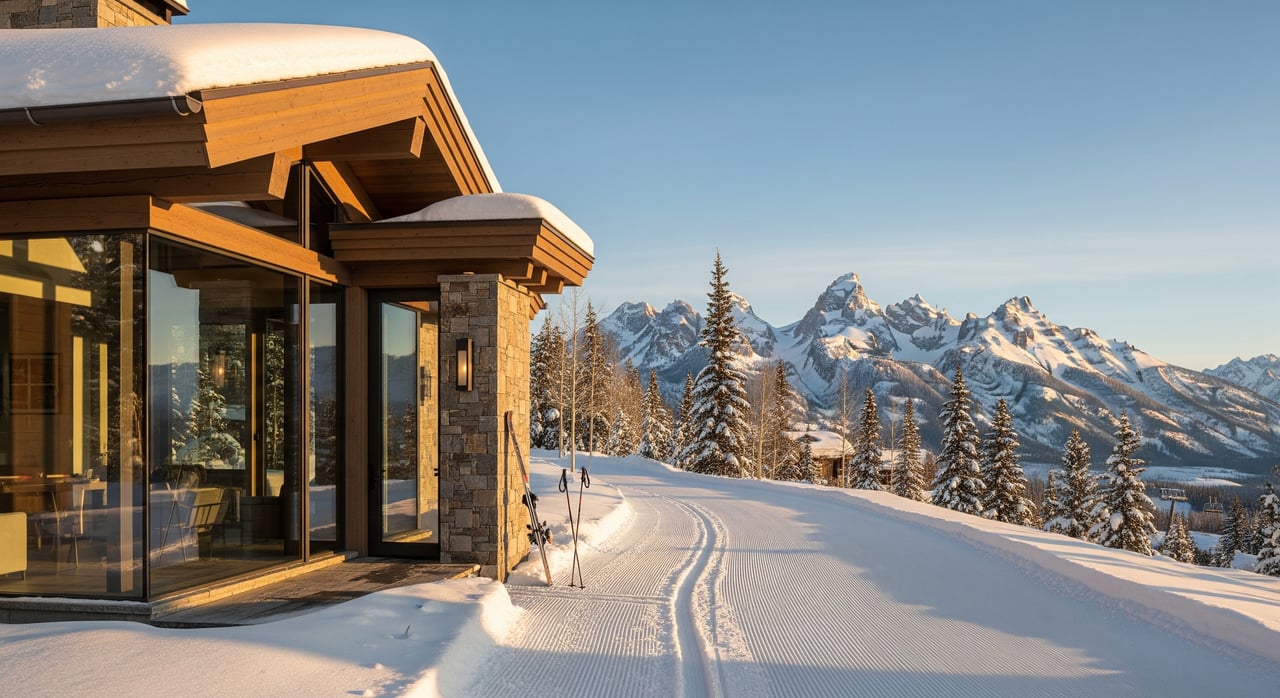
Craving the ease of clicking into your skis right outside your door at Grand Targhee? You’re not alone. If you’re exploring second homes or investment properties in Alta, the phrase “ski-in/ski-out” can sound straightforward, yet it covers several very different access experiences. In this guide, you’ll learn how ski access is defined around Grand Targhee, where different property types tend to sit, how access influences pricing and rentals, and how to verify claims before you buy. Let’s dive in.
What ski-in/ski-out means
“Ski-in/ski-out” is a marketing term, not a single standard. Understanding the category helps you compare apples to apples.
- Doorstep or direct ski access: You step out and clip in within a few feet onto skiable terrain that takes you to a lift without using a vehicle or crossing a public road. This is the highest convenience level and typically the most desirable for families and dedicated skiers.
- Short walk or slope-side: You can walk 5–10 minutes or less to a lift, run, or station, sometimes along a plowed road or footpath. It’s practical, though less convenient on storm days.
- On-resort with shuttle or longer walk: You’re in the resort’s lodging zone or immediate valley area but need a shuttle or a longer walk to reach lifts. It tends to be more affordable per square foot than slope-side.
- Off-resort, drive to base: You drive from Alta or nearby neighborhoods to the base. These properties are usually more budget-friendly and can trade on privacy, space, or views.
Important qualifiers to ask about:
- No road crossings: Direct access without crossing a plowed road is safer and more convenient, especially for kids.
- Easements and permissions: Some parcels rely on specific ski-access easements or resort policies. Confirm whether access is guaranteed by deed or HOA documents.
- Resort rules: Resorts can designate approved on-snow routes for owners. Make sure your intended route is permitted.
Property types near Targhee
Grand Targhee’s Alta area is smaller and less densely built than big-name resorts, so true doorstep options are limited. Inventory can be tight, with the most direct access typically closest to the base area.
Condos near the base
Condos cluster around base and village zones, where you’ll find the best chance of slope-side or short-walk access. These units often have HOA amenities and are popular for short-term rentals due to low maintenance and proximity to lifts.
Townhomes in the first ring
Townhomes and duplexes sit in the first ring around the base. Many offer gear storage and a bit more living space than condos. Access ranges from short-walk to shuttle-supported depending on exact location.
Single-family homes and cabins
Single-family options typically sit farther from the base unless there are a few on-mountain lots. These homes trade on space, privacy, and views. Supply is limited, which can produce sharper price swings when listings do appear.
Fractional and condo-hotel units
Fractional shares and condo-hotel formats are usually inside resort lodging buildings. They can be a lower-cost entry point for limited use while leveraging resort rental management.
How access impacts value
Across resort markets, being close to the lifts usually commands a premium and stronger winter rental performance.
- Convenience premium: Avoiding parking and shuttles saves time every day. That convenience often translates into higher buyer demand and rental appeal.
- Family-friendly draw: Groups with children or mixed ability levels tend to prefer doorstep or minimal-walk access.
- Marketing pull: Listings that accurately promote “true ski-in/ski-out” often attract more attention on booking channels.
- Pricing and revenue: Industry reports commonly cite a premium in the range of about 10 to 40 percent for genuine ski-in/ski-out compared to similar off-mountain units. Exact numbers depend on local supply, quality, and policies. With Grand Targhee’s smaller slope-side inventory, the rarity factor can amplify that premium.
Seasonality matters. Grand Targhee is known for consistently deep snowfall, which supports a reliable winter season and strong peak demand. Annual results still depend on summer draw, management quality, and operating costs such as HOA fees, insurance, and property taxes.
Verify ski access
Before you pay a premium for “ski-in/ski-out,” confirm the reality on the ground:
- Check the resort trail and lift maps to see if a designated run or access path reaches the parcel or building.
- Review county parcel maps for easements that guarantee access. Look for recorded rights, not informal paths.
- Ask the listing agent if access requires crossing a road, riding a shuttle, or following a specific route approved by the resort.
- Visit the site or review detailed photos and videos. Note realistic walk times, snow storage, and where skis and boots live.
- Read HOA or resort covenants that govern exterior access to slopes and owner use.
Buyer and investor checklist
Use this quick checklist to compare properties and avoid surprises:
Access verification
- Direct exit to skiable terrain without crossing a public road?
- Deeded or HOA-documented ski easement in place?
- Any resort permissions or seasonal limits on routes?
Daily convenience
- On-site ski storage, boot room, or gear lockers?
- Distance to lifts, dining, and ticketing in real-world minutes?
- Who clears snow on paths and sidewalks, owners or HOA?
Financial and rentals
- Price premium versus comparable off-mountain properties based on recent comps?
- HOA fees, special assessments, and any resort rental program revenue shares?
- Local short-term rental rules, permits, and lodging taxes accounted for in your pro forma?
Market and seasonality
- Winter-heavy demand profile understood and modeled?
- Summer and shoulder-season potential for your unit type?
- Road access and elevation considerations in spring and fall?
Legal and insurance
- Deed restrictions, covenants, or conservation easements that limit use?
- Insurance costs for slope-adjacent properties reviewed with a local agent?
Exit strategy
- Liquidity of similar slope-side units in recent local sales?
- Broader resale appeal beyond skiing, such as views or trail access?
Plan your Alta search
Start by deciding which access category truly fits your lifestyle and budget. If you want absolute convenience for multi-generational groups, target direct or short-walk locations. If your priority is space or privacy at a better price, consider on-resort shuttle or off-resort options with standout features.
For investors, model net returns conservatively. Include HOA fees, management costs, utilities, lodging taxes, and realistic occupancy patterns. Keep in mind that management quality and property condition can outweigh raw proximity.
As a locally rooted team serving Alta and Teton Valley, we combine neighborhood insight with construction and development know-how to help you verify access, analyze comps, and understand HOA and easement details before you write an offer. If you’re ready to compare slope-side options or want a tailored shortlist, connect with Grand Associates to start a focused, efficient search.
FAQs
What counts as true ski-in/ski-out at Grand Targhee?
- Direct, on-snow access from your building to terrain that leads to lifts without crossing a public road or using a shuttle.
Are many doorstep-access homes available in Alta, WY?
- Inventory is limited because Grand Targhee is smaller and less built out, so true doorstep properties are relatively rare.
How does heavy snowfall affect ski access and rentals?
- Consistent, deep snow supports reliable winter seasons and demand, but it also makes short-walk and storage logistics more important to evaluate.
Is slope-side always the best investment near Targhee?
- Slope-side often earns a premium and stronger winter bookings, but quality, management, and HOA costs can outweigh access in net results.
What should I check in HOA documents for ski-in/ski-out properties?
- Look for recorded access easements, route rules, rental policies, fees, and any restrictions on exterior use or modifications.
How can I confirm a listing’s ski access before making an offer?
- Use resort maps and parcel records, ask the listing agent about routes and road crossings, and verify onsite with photos or a visit.